Electric Current Continuous Static Electricity Not Continuous
| Home > Support > Understanding Electricity | ||||||||||||||||||||||||||||||||||||||||||||
 | ||||||||||||||||||||||||||||||||||||||||||||
Understanding Electricity
| ||||||||||||||||||||||||||||||||||||||||||||
| | ||||||||||||||||||||||||||||||||||||||||||||
| What is Electricity? Any appliances that we use in our daily lives such as household appliances, office equipments and industrial equipments, almost all of those things take electricity. Therefore, we should understand electricity. The first question that we will find out the answer is "where does electricity come from?" | | |||||||||||||||||||||||||||||||||||||||||||
| All matters are made up of atoms. Then ask the next question, "What are atoms?" | ||||||||||||||||||||||||||||||||||||||||||||
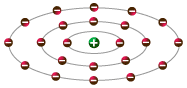
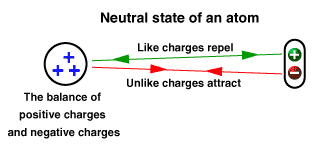
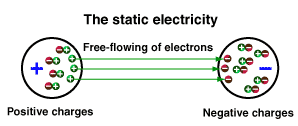
| Nucleus is made up of protons and neutrons, and the number of protons and neutrons are balanced. Neutrons have no electric charge, protons have positive charges (+) and electrons have negative charges (-). A positive charge of proton equals a negative charge of electron. Electrons are bound in their orbit by attraction of protons, but electrons in the outer band can become free of their orbit by some external forces. These are referred to as free electrons, which move from one atom to the next, electron flows are produced. These are the basis of electricity. Materials that allow many electrons to move freely are called conductors and materials that allow few free electrons to move are called insulators. All matters are made up of atoms that have electric charges. Therefore, they have electric charges. For the matter that has a balanced the number of protons and electrons, positive charge force and negative charge force are balanced. It is called neutral state of an atom. (The number of protons and electrons remains equal.) "Static electricity" represents a situation that all things are made up of electric charges. For example, the rubbing of material against another can cause the static electricity. Free electrons of one material move forcefully till they are freed of their orbits around nucleus and move to another. Electrons of one material decrease, it presents positive charges. At the same time, electrons of another increase, it has negative charges. In general, charge producing of the matter means the matter has electric charges. It has positive and negative charges, which is expressed in coulomb. | ||||||||||||||||||||||||||||||||||||||||||||
| | ||||||||||||||||||||||||||||||||||||||||||||
| Current, Voltage and Resistance | ||||||||||||||||||||||||||||||||||||||||||||
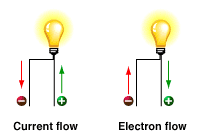
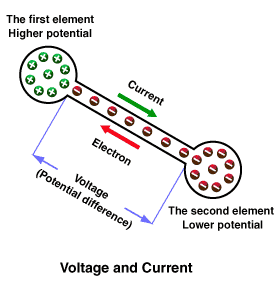
| Wires are made up of conductors such as copper or aluminum. Atoms of metal are made up of free electrons, which freely move from one atom to the next. If an electron is added in wire, a free electron is attracted to a proton to be neutral. Forcing electrons out of their orbits can cause a lack of electrons. Electrons, which continuously move in wire, are called Electric Current. | | |||||||||||||||||||||||||||||||||||||||||||
 | | |||||||||||||||||||||||||||||||||||||||||||
| A current of one amp means that current pass through a cross-section of two conductors, which are placed in parallel 1 meter apart with 2x10⁻⁷ Newton per meter force occur in each conductor. It can also mean charges of one coulomb (or 6.24x10¹⁸ electrons) passing through a cross-section of a conductor in one second. | ||||||||||||||||||||||||||||||||||||||||||||
| Electromotive force means the force which makes current continuously flows through a conductor. This force can be generated from power generator, battery, flashlight battery and fuel cell, etc. Volt, abbreviated "V", is the unit of measurement used interchangeably for voltage, potential, and electromotive force. One volt means a force which makes current of one amp move through a resistance of one ohm. | | |||||||||||||||||||||||||||||||||||||||||||
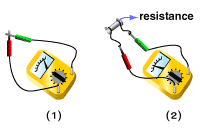
| What is resistance? The unit of measurement for resistance is ohms and its symbol is the Greek letter omega (Ω). The resistance of one ohm means a conductor allows a current of one amp to flow with a voltage of one volt. All materials are difference in allowing electrons flow. Materials that allow many electrons to flow freely are called conductors such as copper, silver, aluminium, hydrochloric solution, sulphuric acid and saltwater. In contrast, materials which allow few electrons to flow are called insulators such as plastic, rubber, glass and dry paper. Another type of materials, semiconductors have characteristics of both conductors and insulators. They allow electrons to move while being able to control flow of electrons and examples are carbon, silicon and germanium, etc. The resistance of conductor depends on two main factors as the followings:
| ||||||||||||||||||||||||||||||||||||||||||||
| | ||||||||||||||||||||||||||||||||||||||||||||
| How to measure current | ||||||||||||||||||||||||||||||||||||||||||||
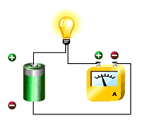
| The instrument used to measure current is called ampere meter or ammeter.
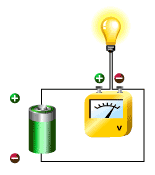
How to measure voltage
How to measure resistance
| ||||||||||||||||||||||||||||||||||||||||||||
| | ||||||||||||||||||||||||||||||||||||||||||||
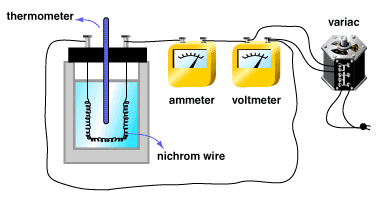
| Electric current is the ability to do work. Electric current can be converted to heat, power and magnetism, to name a few. Electric current is classified by its functions and three primary types are:
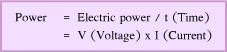
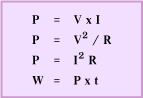
1. Heat and power is used to make heat and power.
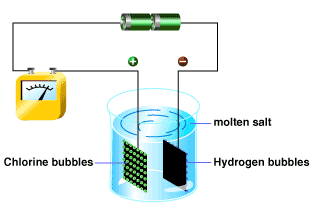
2. Electrochemistry
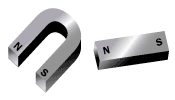
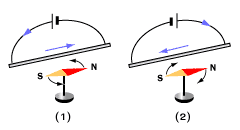
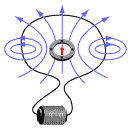
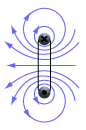
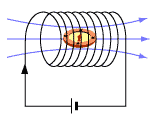
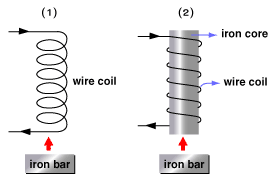
3. Magnetism
Understanding meaning of magnetism:
| ||||||||||||||||||||||||||||||||||||||||||||





Source: https://www.leonics.com/support/article2_2j/articles2_2j_en.php

Post a Comment for "Electric Current Continuous Static Electricity Not Continuous"